Our Products
Discover our diverse range of offerings, including facsimiles, replicas, gigapixel artworks, museum guides, high-quality art books, and unique merchandise. Immerse yourself in the world of beautiful manuscripts, detailed miniatures, inspiring literature, and breathtaking images. Our product lineup combines the expertise, passion, and know-how of leading publishers. We are excited to present our comprehensive collection to you. Browse around, take a look at our exclusive offers, and don’t hesitate to contact us if you have any interest or questions.
Contact us now—use our online form or call us to learn more
The Hildesheim Golden Calendar
InquiryThe Hildesheim Golden Calendar
THE ZACKENSTIL
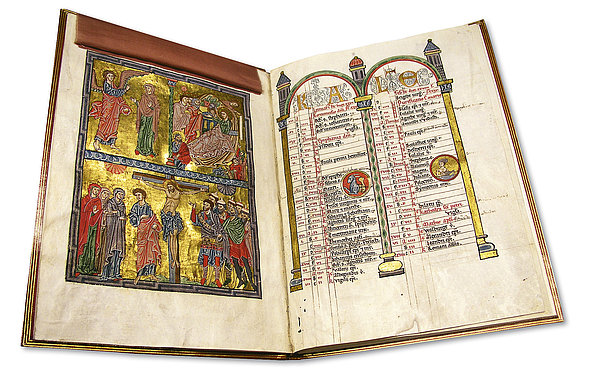
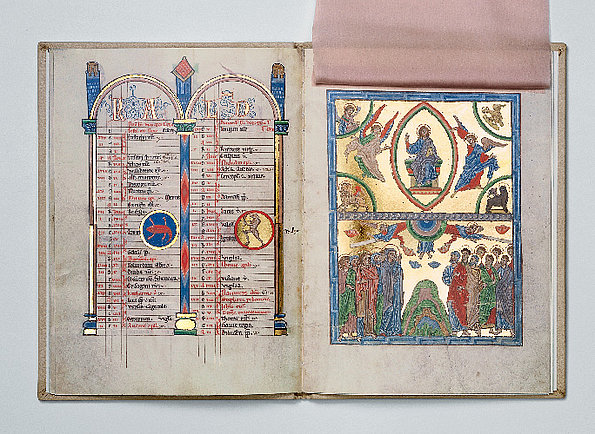
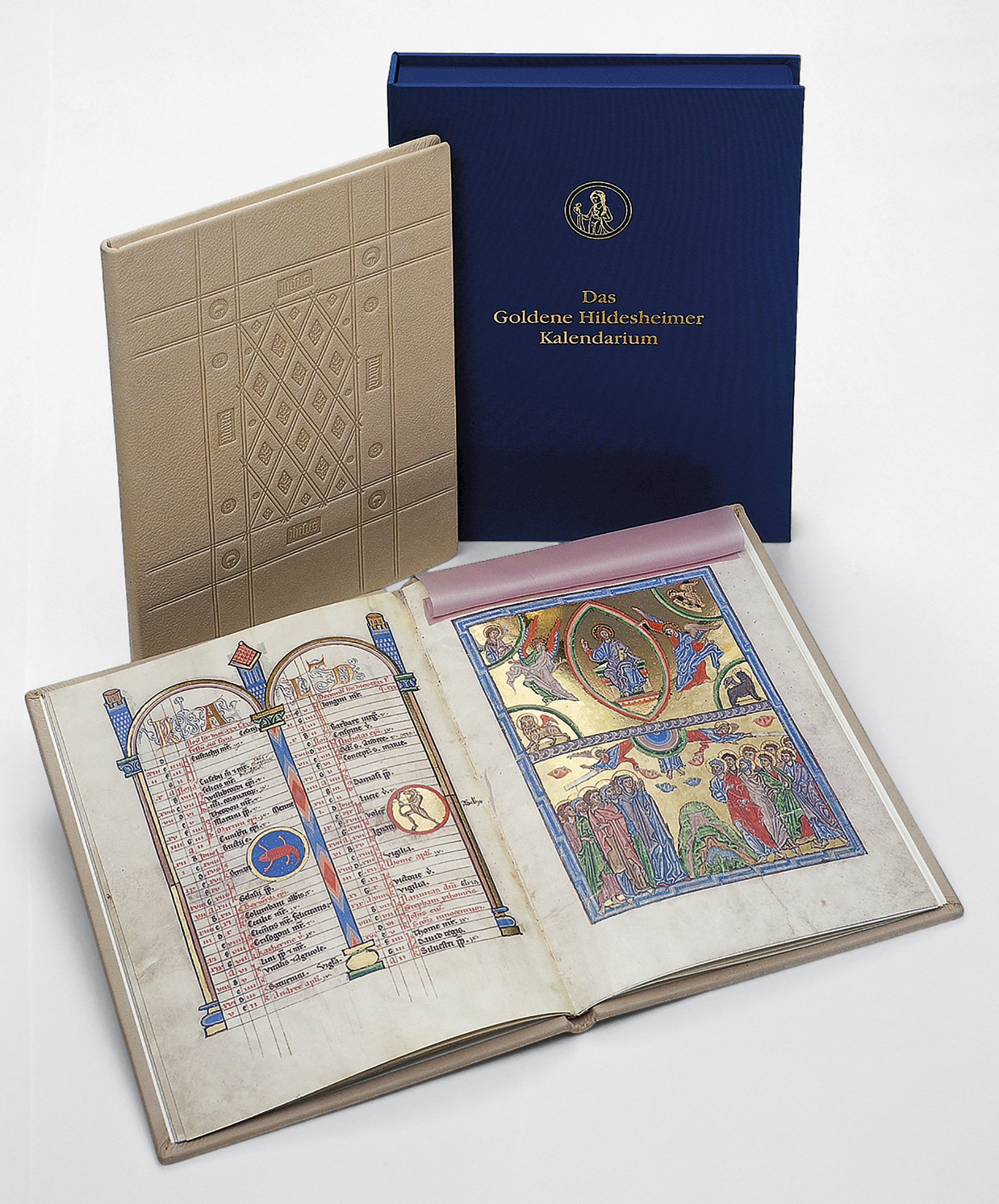
The Golden Calendar of Hildesheim is an excellent example of the so-called Zackenstil, or jagged style. This independent style of the 13th century combines two art forms, the emotionally oriented art of Byzantium and the early Gothic art of the West, with its vivid, sometimes even dramatic expressiveness. Characteristic features of the Zackenstil are sharp-edged, excellently coloured drapery folds, to which the style owes its name, and extensive golden grounds.
THE SCRIPTORIUM
The manuscript was produced towards the middle of the 13th century in the well-known scriptorium of the Benedictine Abbey of St. Michael’s in Hildesheim, originally founded by Bishop Bernward (active 993–1022, canonized 1192). The Abbey has been included since 1985 in UNCESCO’s world heritage list, together with Hildesheim Cathedral. The manuscritpt was produced for the noble Abbey of St. Servatius at Quedlinburg.
A NOVELTY IN THE HISTORY OF FACSIMILE REPRODUCTION
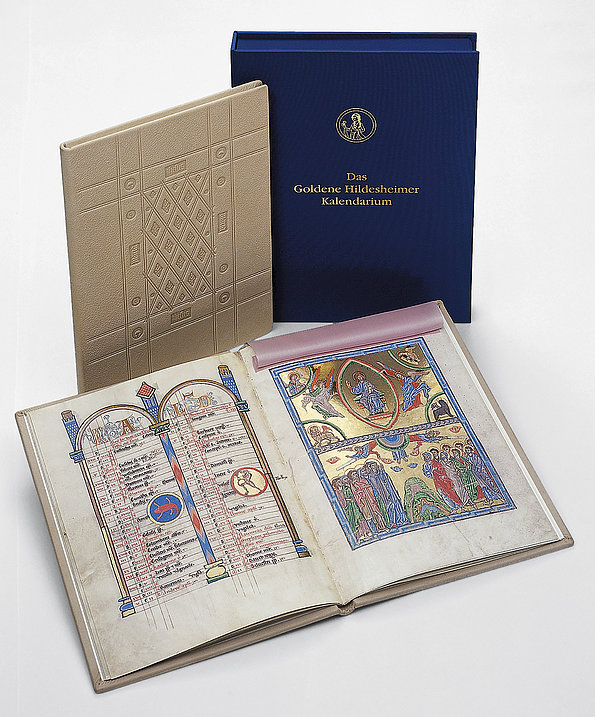
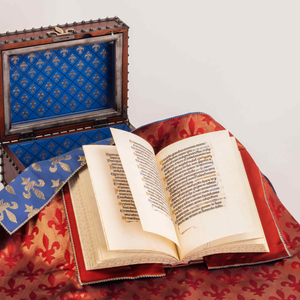
The facsimile edition of the Hildesheim Golden Calendar adds a novelty to the tradition of facsimile production: for the very first time, the silk curtains added to the original manuscript for protection of the individual pages have been reproduced in the facsimile edition.
Faithful facsimile edition of the manuscript Cod. Guelf. 13 Aug. 2° in the Herzog August Bibliothek, Wolfenbüttel, made around 1250 in Hildesheim.
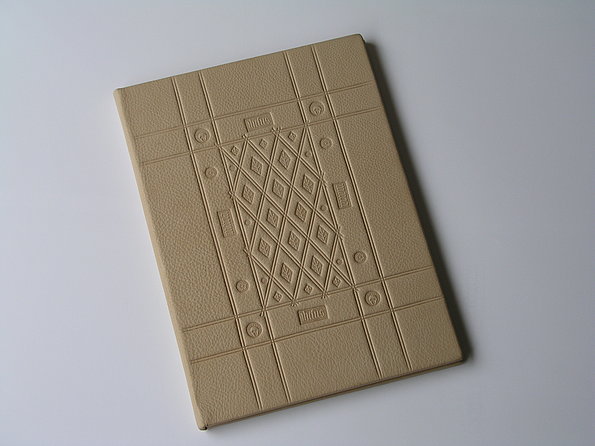
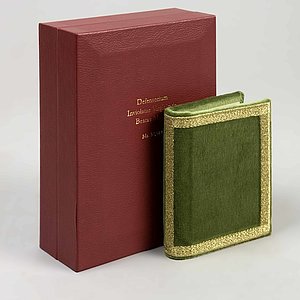
16 pages. Format: 22.5×30.9 cm. Limited to 980 numbered copies worldwide. Lightbrown leather binding with blind tooling. 76-page academic commentary volume by Harald Wolter-von dem Knesebeck, Helmar Härtel and Werner Hohl.
Both volumes in a textile case.
With gold tooling.
Question and Answer
The Zackenstil, or jagged style, is a 13th-century art form that combines the emotionally expressive art of Byzantium with the dramatic vividness of early Gothic Western art. Its hallmark features are sharp-edged, brightly coloured drapery folds and extensive golden backgrounds.
The manuscript was created in the renowned scriptorium of the Benedictine Abbey of St. Michael’s in Hildesheim, a UNESCO World Heritage Site. This abbey, founded by Bishop Bernward, holds great historical and artistic importance.
The manuscript was commissioned for the noble Abbey of St. Servatius in Quedlinburg, reflecting its significance and prestige in medieval art and culture.
The facsimile edition is groundbreaking as it reproduces the original silk curtains added to protect the manuscript pages for the first time in facsimile history.
The facsimile includes 16 pages reproduced with gold tooling, bound in light brown leather with blind tooling. It comes with a 76-page commentary volume and a textile case. The edition is limited to 980 numbered copies worldwide.
The Zackenstil represents a unique fusion of Byzantine and Gothic styles, embodying a transitional phase in European art that influenced subsequent artistic developments.
The Abbey’s scriptorium was a centre of excellence, producing manuscripts of exceptional quality that blended spiritual devotion with artistic innovation, as exemplified by the Golden Calendar of Hildesheim.