Our Products
Discover our diverse range of offerings, including facsimiles, replicas, gigapixel artworks, museum guides, high-quality art books, and unique merchandise. Immerse yourself in the world of beautiful manuscripts, detailed miniatures, inspiring literature, and breathtaking images. Our product lineup combines the expertise, passion, and know-how of leading publishers. We are excited to present our comprehensive collection to you. Browse around, take a look at our exclusive offers, and don’t hesitate to contact us if you have any interest or questions.
Contact us now—use our online form or call us to learn more
Die Trinity - Apokalypse
A BOOK OF INSPIRATION
Apocalypses are prophecies about the end of time and the Last Judgement made known in wondrous ways. Divinations of this kind occurred again and again, but the Revelation to John is the only one included in the New Testament. Using mysterious images and striking language, John describes the end of the world and the Last Judgement. Yet terror is not the focus of this vision: the Revelation to John is a book of consolation and inspiration.
LAVISH-SPLENDOUR WITH FINELY TOOLED GOLD
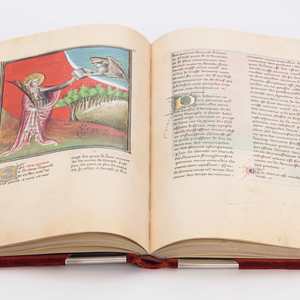
Even amongst the splendid English apocalypses, the magnificente Trinity Apokalypse stands out as the Kulmination of Manuskript Illumination in the Early Gothic period. The rich decoration of this Codex is unique. 71 large-format miniatures with over one hundred individual pictures on sixty-two pages and a lavish use of Toole gold Leaf contribuye to the spendier and Beauty of this manuscript. The intense effect that radiates from the miniatures is achieved by the harmonious combination of colors.
THE MOST RENOWNED APOCALYPSE OF THE GOTHIC ERA
Within the hallowed halls of Trinity College, Cambridge, rests the most magnificent illuminated manuscript of the Book of Revelation ever produced by Gothic artistry. Since 1660, the Trinity Apocalypse, crafted in the mid-13th century, has been an esteemed treasure of the Trinity Library. Its lavish embellishments, featuring vividly coloured miniatures and exquisitely chiselled gold, are unparalleled among English apocalypses. Moreover, its unique French text, accompanied by a bespoke interpretation of the Book of Revelation, distinguishes it as a singular work of art.
Through the masterful application of diverse pigments, the colouring alternates between muted and radiant tones, imparting a sense of movement and vitality. The use of silver, now oxidised, alongside abundant gold in each miniature, lends the Trinity Apocalypse an enchanting brilliance.
A PICTURE BOOK OF REVELATION
Every illustration in the Trinity Apocalypse has been rendered with extraordinary detail, allowing viewers to peruse a veritable picture book of Revelation. Nearly all of John’s visions are vividly depicted in the miniatures, showcasing an exceptional ability of the artists to imbue the figures with individual character. The expressive faces compel the observer to pause and reflect repeatedly.
LIKE TALES FROM A CHIVALIC ROMANCE
The miniatures of the Trinity Apocalypse frequently depict kings, knights, and noblewomen, all resplendently clad in sumptuous attire. While illustrating John’s visions, their dramatic intensity could equally evoke the grandeur of a chivalric romance. The opulent craftsmanship and depictions of knightly ideals strengthen the supposition that the codex was intended for the highest echelons of aristocracy. The noble lady who appears often in the miniatures is thought to represent the manuscript’s patroness. Scholars have speculated that this figure is Eleanor of Provence, wife of King Henry III, who may have commissioned the lavish use of gold to enhance the manuscript’s splendour.
THE LIFE OF ST JOHN AS A FRAME: A MODEL FOR FUTURE APOCALYPSE MANUSCRIPTS
The Trinity Apocalypse is framed by a grand, gold-illuminated gallery of illustrations depicting the life of St John. Beginning and concluding the Book of Revelation with the author’s life story represents a groundbreaking innovation in the history of illuminated manuscripts. This unconventional design sparked a trend, becoming so popular that all English Apocalypse manuscripts of the late 13th century adopted this new format.
However, none captures the devout and miraculous life of St John as vividly or comprehensively as the Trinity Apocalypse. With eleven detailed pages dedicated to his story, it stands unparalleled in its compelling and elaborate portrayal.
THE FACSIMILE EDITION
The Trinity Apocalypse is the most resplendent exemplar among the extensive series of English illuminated manuscripts of the Book of Revelation. This richly adorned codex, measuring an imposing 43.2 by 30.5 centimetres across 62 pages, has been reproduced in a strictly limited edition of 980 hand-numbered facsimiles. As in the original, each of the 71 large-format miniatures is framed in gleaming gold. Intricate gold and, in some instances, silver embellishments further enhance the illustrations. The diverse palette, with its subtle tonal variations, has been faithfully reproduced in the facsimile.
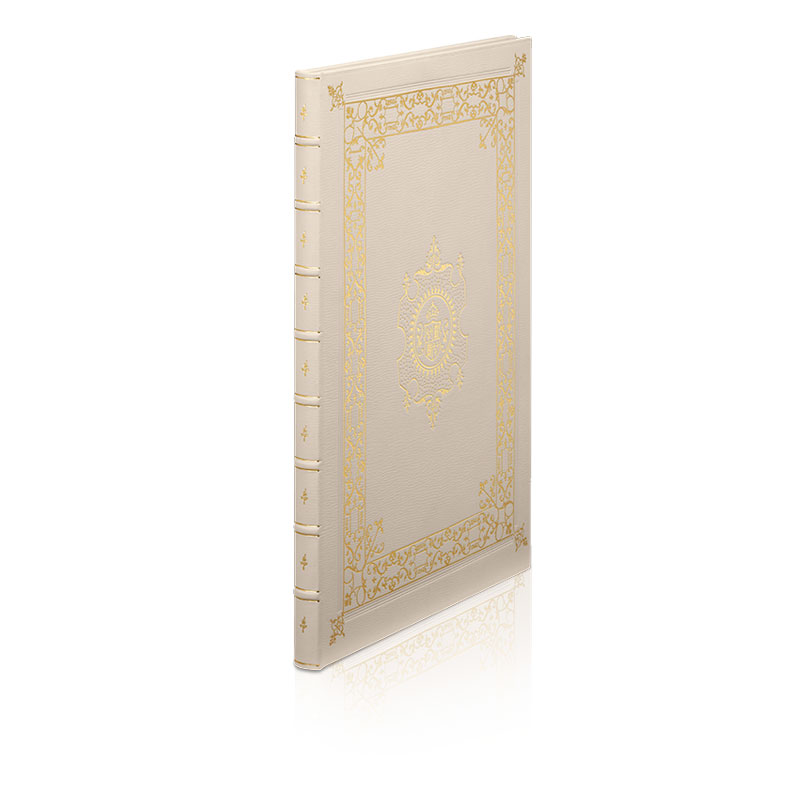
The facsimile is protected by a white goatskin binding, painstakingly crafted and adorned with gold embossing. Both the front and back covers bear the coat of arms of the English royal house, mirroring the original.
THE SCHOLARLY COMMENTARY: A GUIDE TO THE MANUSCRIPT
Dr David McKitterick, Librarian at Trinity College, serves as editor and co-author of the accompanying commentary volume. Contributions include translations of the Old French text into modern German by esteemed academics such as Professor Nigel Morgan (University of Oslo), Professor Ian Short (University of London), and Dr Teresa Webber (Trinity College, Cambridge). Both the facsimile and commentary are presented in a protective acrylic slipcase, ensuring their preservation for future generations.
Characteristics
Trinity-Apokalypse | |
| Creation Year | 13th century |
| Library | Library of the Trinity College, Cambridge |
| Signature | MS. R. 16.2 |
| Extent | 62 pages |
| Miniatures | 71 miniatures |
| Type of Manuscript | Manuscript |
| Genre | Apocalipsis |
Die Edition
Trinity-Apokalypse | |
| Format | 43,2cm x 30,5cm |
| Limitation | 980 hand-numbered Examples |
| Binding | Leather binding |
| Publisher | Faksimile Verlag |
Questions and Answers
What is the significance of the Book of Revelation in the New Testament?
The Book of Revelation is the sole apocalypse included in the New Testament. It narrates the end of the world and the Last Judgment, placing emphasis on solace and encouragement rather than fear.
What distinguishes the Trinity Apocalypse as a masterpiece of Gothic manuscript illumination?
The Trinity Apocalypse is renowned for its 71 large-format miniatures adorned with meticulously chiselled gold, vibrant colours, and intricate depictions of the visions, creating a unique blend of aesthetic appeal and dynamic vitality.
How does the Trinity Apocalypse reflect courtly culture?
Its miniatures feature figures such as kings, knights, and noblewomen in regal attire, evoking the grandeur of chivalric tales. The lavish embellishments suggest the codex was intended for the aristocracy, possibly commissioned by Eleanor of Provence, wife of King Henry III.
What is unique about the depiction of St John’s life in the Trinity Apocalypse?
It is the first manuscript to frame the Revelation with the life story of St John. This innovation became a trend in late 13th-century English apocalypse manuscripts but remains unparalleled in its depth and detail.
What are the key features of the Trinity Apocalypse facsimile edition?
The facsimile is an authentic reproduction of the codex, featuring intricate gold and silver detailing. Limited to 980 copies, it is bound in white goatskin leather with gold embossing and housed in a protective acrylic case.
How did the use of colour enhance the Trinity Apocalypse?
The harmonious blending of various pigments produces a dynamic, lifelike quality. The use of oxidised silver and shimmering gold imparts a magical radiance to the miniatures.
What scholarly contributions accompany the facsimile edition?
A comprehensive commentary, edited by Dr David McKitterick and esteemed scholars, offers translations and in-depth analyses, elucidating the manuscript’s historical and artistic significance.