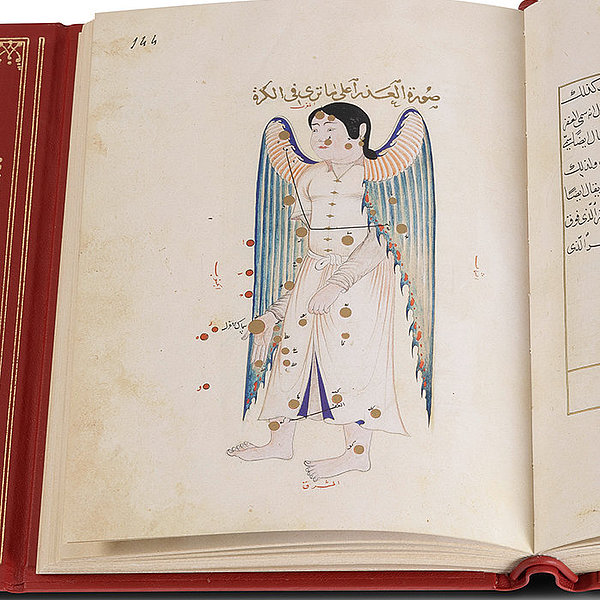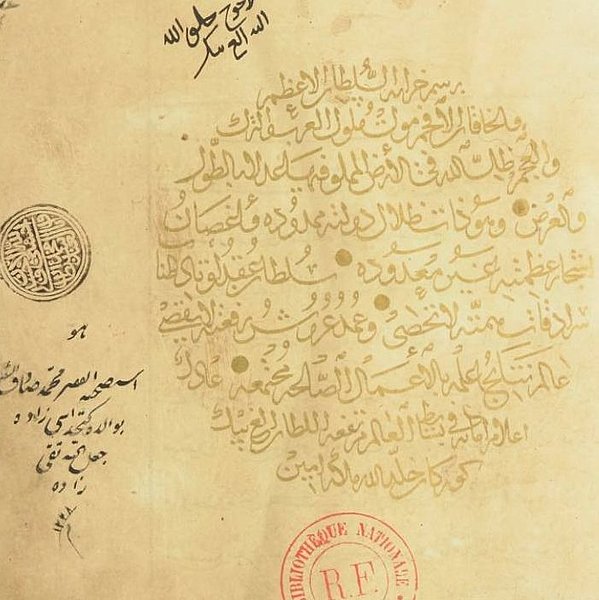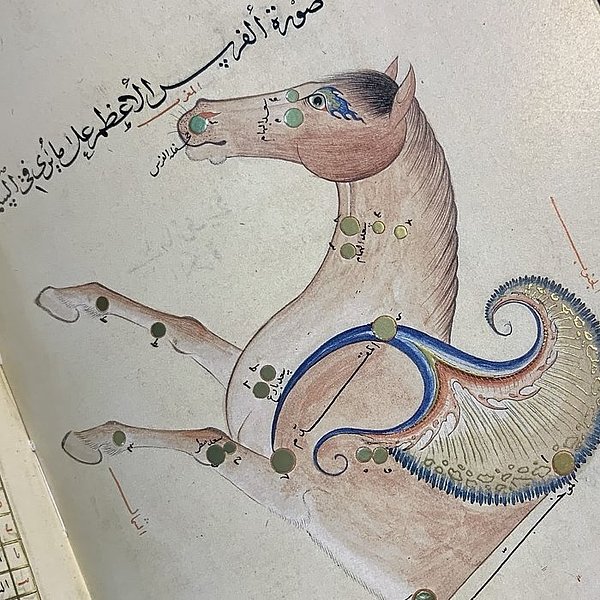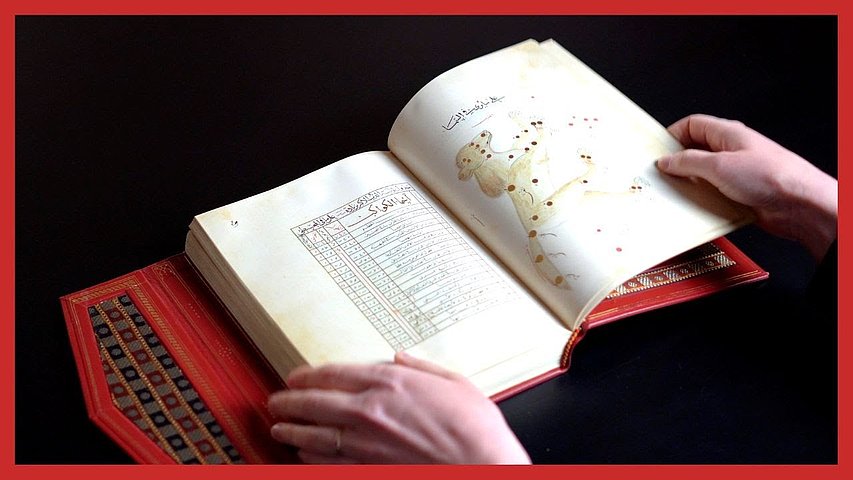
Ulugh Beg’s book of the fixed stars by Al-Sufi
(Paris, Bibliothèque national de France, Arabe 5036)
The fascination of the firmament
Astronomy is one of the oldest sciences, founded and pursued through a long tradition in the endeavour of the human mind to grasp and understand the workings of the universe. From earliest times, it was only by observing and studying the celestial bodies that calendars and time could be determine.
The daily lives of people throughout history have always been directly dependent on these calculated rhythms and the changes in nature that came along with them, which is why people attached such great importance to the heavenly bodies and often worshipped them in rituals. The great interest in astronomy is also reflected in the construction of emblematic structures such as Stonehenge (around 3000–1500 B.C.) or the Egyptian pyramids; the Bronze Age Nebra Sky Disc is another example illustrating the great importance accorded to the celestial bodies and their observation from early on. Astronomy played a decisive role in everyday life – which was shaped by the seasons – as well as in religious life (determining prayer times and high feast days) in both the Christian and Islamic worlds.
“Religions disperse like mist, empires destroy themselves, but the works of the scholar remain for all time. It is the duty of every true Muslim, man and woman, to strive after knowledge.”
Ulugh Beg (1394–1449)